

 EN
EN  NL
NL Your basket is currently empty!

Copper care
• Copper jewellery will tarnish or oxidise over time; it’s a common natural process of changing colours that makes copper so unique.
• If you don’t want or like this natural patina you could seal the jewellery with clear nail polish or a jewellers wax.
• Raw copper has natural antimicrobial benefits. Molecular mechanisms responsible for the antibacterial action of copper have been a subject of intensive research. Read about it if you like, it’s a very interesting topic.
• Clean your copper jewellery regularly with a soft cotton cloth.
• Bring shine back by sprinkling table salt on a slice of fresh lemon, rub the copper with the lemon and rinse well with water. Use a soft cotton cloth to polish it slightly. Be really cautious with pearls/gemstones as the lemon acidity can be particularly harmful!
• Always remove your copper jewellery to avoid contact with: excessive water (e.g. shower), or chemicals like perfume, lotions, soap, etc.

Copper Facts

Copper has been used by humans from as early as circa 8000 BC: it has been in use at least 10,000 years. More than 95% of all copper ever mined and smelted has been extracted since 1900, and more than half was extracted during the last 24 years. Copper has been used in jewellery from ancient times. The earliest copper jewellery has been found dates back to the 8th millennium BC.
Some believe that wearing copper jewellery comes with certain benefits as copper is an essential mineral for humans. By wearing copper jewellery on the skin a minimal amount of the mineral and it’s healing properties is allowed into the body by absorption.
Latest Items
-
 Sapphire and Topaz ring€ 44,95
 -
 Chevron Amethyst necklace€ 59,95
 -
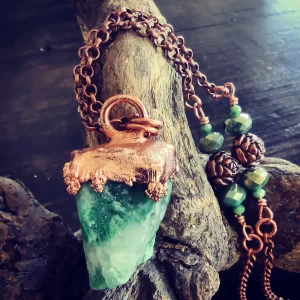 Raw green Aventurine necklace€ 59,95